


ASCER underlines the need to continue working together following the publication of the European Commission’s benchmark proposal and ahead of the July review
This endorsement further consolidates the sector’s position and amplifies its message to Europe
Representatives from the General Workers’ Union (known in Spanish as UGT) and the Spanish trade union Comisiones Obreras, today formalised their endorsement of the Joint Statement promoted by the Valencian Community and Emilia-Romagna in defence of a fair, viable transition aligned with the technological advancements of the ceramic industry.
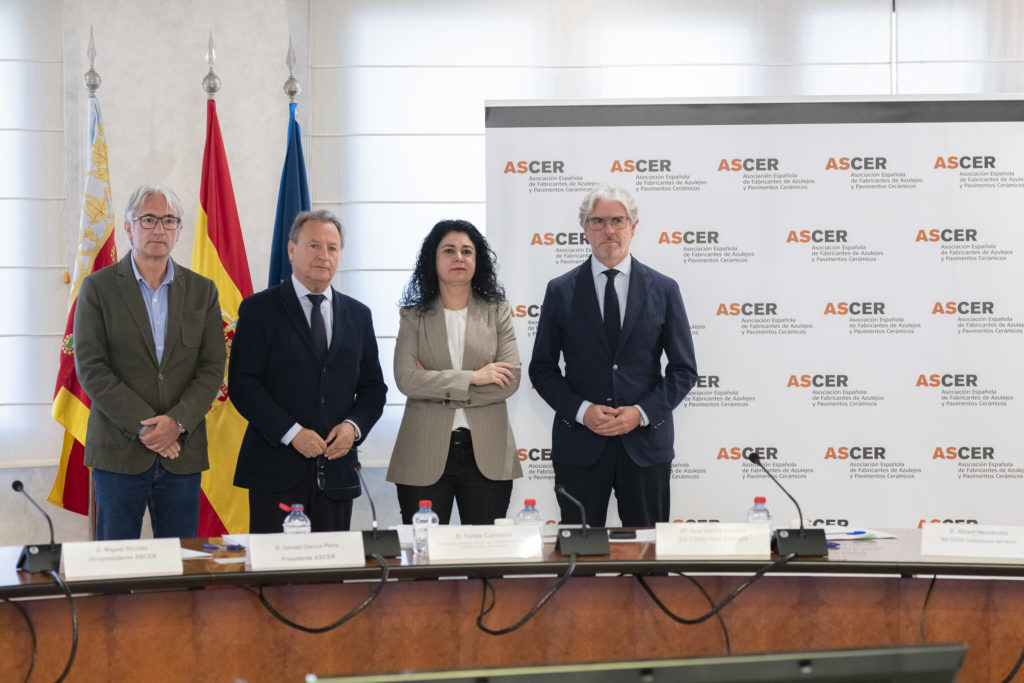
The signing ceremony, held at ASCER headquarters, was attended by the general secretaries of the UGT and CCOO trade unions in the Valencian Community, Tino Calero and Ana García Alcolea; the Regional Ministry of Industry of the Generalitat Valenciana, through the Regional Secretary for Industry, Felipe Carrasco; and ASCER’s president and vice-president, Ismael García Peris and Miguel Nicolás Prior. Today’s endorsement carries particular significance as it comes in the context of the recent publication by the European Commission of the proposed benchmarks for the 2026-2030 period.
During the opening session, ASCER president Ismael García Peris thanked the trade unions for their support, as well as the commitment and work undertaken by the Regional Ministry of Industry, which alongside other institutions has supported the sector in recent months. García Peris stressed the importance of continuing joint efforts during this new stage of the European process. “The published proposal continues to pose a very concerning outlook for our sector, but at the same time it creates an opportunity for review that did not exist just a few weeks ago. In this context, it is essential to continue conveying a strong and united message to Europe,” stated ASCER president Ismael García Peris.
UGT and CCOO’s endorsement of the Joint Statement further strengthens the position defended in recent months by numerous institutions calling for a regulatory framework that recognises the technological specificities of the ceramic sector and enables a viable pathway towards decarbonisation.
ASCER reminded attendees that the ceramic industry fully supports Europe’s climate goals, but insisted that the industrial transition must be realistic, technically viable and compatible with competitiveness and the safeguarding of industrial employment.
